Showing posts with label pyramids. Show all posts

Saturday, 17 October 2015

The Lord of Sipán - The Richest Tomb in Peru

Our next stop having left Chachapoyas was the city of Chiclayo, on Peru's north coast. We took a nightbus here from Chachapoyas, arriving at the antisocial hour of 4 am. It seems that most nightbuses in the north of Peru leave at around 8pm, regardless of the number of hours to the destination, so we've arrived before dawn several times!

Chiclayo is not the most pleasant of cities - it's big, busy and polluted. However, there are several amazing archaeological sites in the area, plus one of Peru's best museums, and we spent most of our time exploring these attractions.

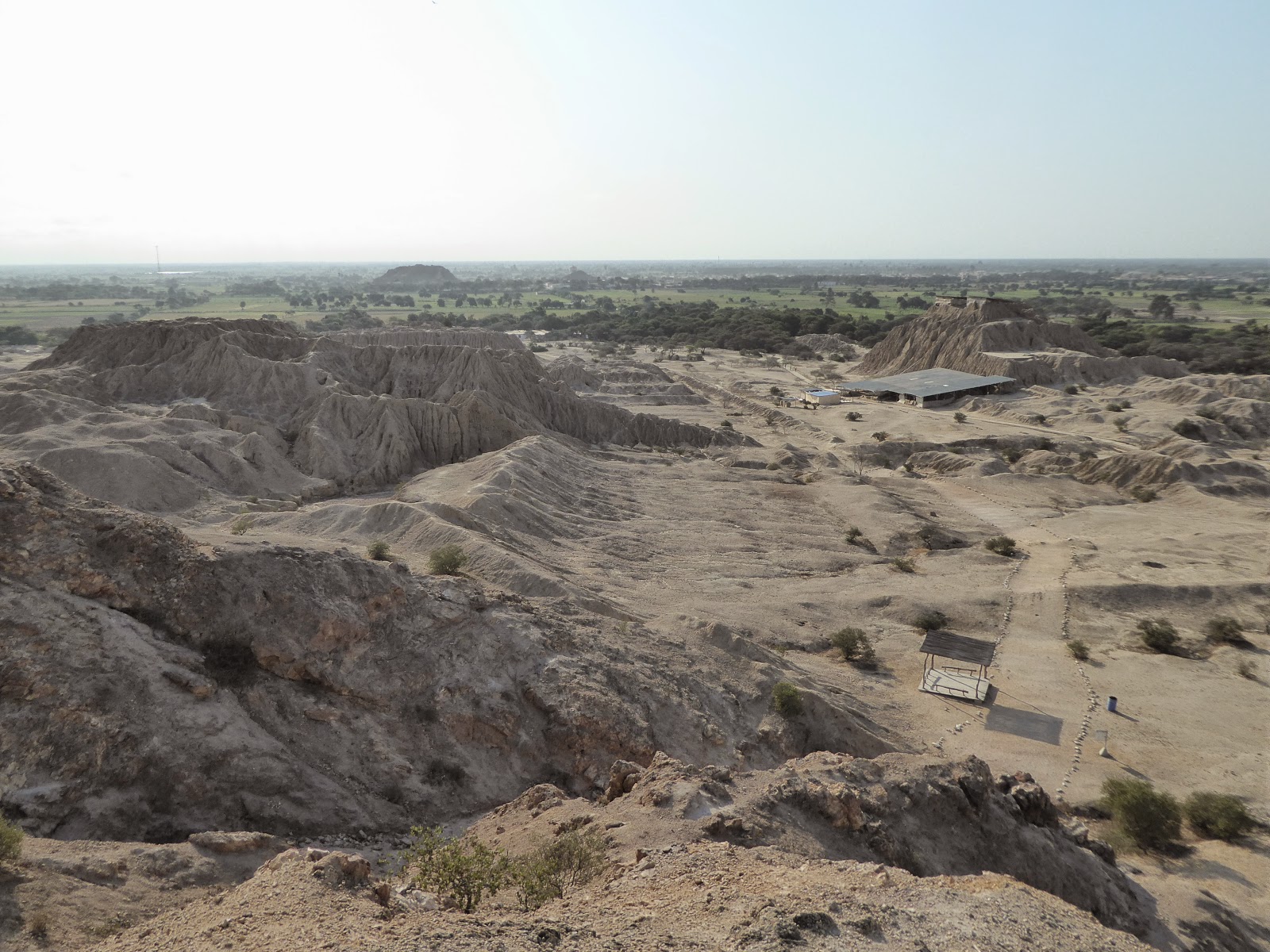
View from Purgatory Hill at Túcume, near Chiclayo
A short colectivo (shared taxi) ride from Chiclayo is the town of Lambayeque, which is home to the Museo Tumbas Reales de Sipán. This museum showcases an incredible collection of treasures that were found in the Royal Tombs of Sipán (dating to about CE 300), a few km away. The discovery of these tombs in 1987 and their subsequent excavation was hugely significant in archaeology. The main tomb of the 14 tombs discovered at Sipán belonged to a great lord of the Moche culture - in fact the most important person of all, equivalent to a king. And unlike most pre-Incan graves, his tomb had been left intact, undiscovered by gravediggers.

This Lord of Sipan was so important that he was buried with hordes of ceramics, gold and silver objects, armour, offerings, animals and even several other people as his 'attendants' into the afterlife - the warriors that were buried with him had had their feet amputated, probably to render them incapable of leaving. The finds from just this one tomb took up an entire floor at the museum, with case after case of unbelievable riches. There were also recreations of several of the tombs as they originally looked when first excavated. It was all really interesting: you can see why these tombs have helped archaeologists such a lot to shed more light on the people and practices of the Moche culture. Sadly we weren't allowed to take any photos.

Pyramids at Túcume
Also near Chiclayo, we visited another site called Túcume. This huge complex of pyramids, now crumbling and covered in mud and sand so they just look like giant mounds scattered across the landscape, was originally built by a different culture - the Sican people (approx CE 800-1350). It continued being used as an important regional centre by the Chimu and later the Incas. At the centre of the site is a hill known as Purgatory Hill, which we climbed to get a great view of the sheer scale of the area.  Purgatory Hill has a story behind its name. At the start of the Spanish occupation of this area, the Spanish lit fires atop this hill and claimed it was purgatory. In an attempt to scare the locals into converting to Catholicism they even dressed as devils and threw non-believing locals to their deaths.

Part of the Sechín site at Casma
We headed down from Chiclayo to Lima via the small town of Casma in order to visit yet another amazing set of ruins (Peru is full of them!) In this case, it was the ancient site of Sechín, dating from around BCE 1600. Most of it is a heap of rubble, but the main temple building has been restored to some extent, and the most interesting feature is the incredible bas relief carvings that decorate all the stone blocks of the building's outer wall. These original carvings represent all sorts of gruesome scenes of war and human sacrifice, including people being beheaded and eviscerated. Little is known about the Sechín people but it doesn't sound like they were the nicest of folks!

Gruesome bas relief carvings at Sechín - note beheaded heads!
We've spent the last couple of days in Lima. Today we went to see the San Francisco Monastery, which has a library dating back to the 16th century. I was in my element and wished I could have opened some of the thousands of ancient books there (sadly you are only allowed to gawp at them from a distance!) Our guide told us some of the larger books have pages of animal skin and covers of wood, and weigh over 20 kg. Wow!

Strange carving of two heads on top of one another, at Sechín
Tomorrow we're leaving to Peru and flying down to Santiago and then onto Patagonia, where with Kev's leg now 100% we will finally be hitting the Torres del Paine National Park that we missed on our previous visit. Can't wait!

Monday, 12 October 2015

The Third Highest Waterfall in the World

After leaving the mountains of Huaraz, we continued zigzagging north through Peru. This first took us to some ancient ruins near Trujillo on the coast then, back in the sierra, to Chachapoyas, with more ruins and the third highest waterfall in the world.

The foot of the Gocta Waterfall - note the tiny people!
We wanted to visit Trujillo as it is close to the UNESCO site of Chan Chan. This was the capital of the Chimu culture that was built around 850 CE. It consists of ten huge citadels, although only one has been restored enough to be worth visiting. As the culture lived by the sea, the walls are covered in designs of fishing nets, fish and sea birds.

Fishing net decorations on the walls at Chan Chan
The highlight of the area around Trujillo was some other, earlier, ruins from the Moche culture (approx CE 100 - 800). Now called the Temples of the Sun and Moon, they are two massive pyramids that are still being excavated. Only the Moon temple can be visited, and the excavations have revealed, amazingly, still intact wall paintings.

Painted walls at the Huaca de la Luna
Continuing on to Chachapoyas, we climbed back up into the mountains to see some more ruins - those at Kuelap. This is an enormous fortress that, like Machu Picchu, is on top of a mountain, giving it fantastic views of the surrounding area. It's the largest pre-Colombian structure in the Americas, with huge outer walls 20m high. The construction was begun in 600 CE by the Chachapoyas culture, and was later occupied by the Inca. It's a fascinating site, and many of the remains are still covered by cloud forest. In fact, Chachapoyas is a Quechua word meaning 'cloud forest'.

Trees covering the ruins at Kuelap
Also close to Chachapoyas are a series of incredibly tall waterfalls. We visited the one at Gocta, which is claimed to be the third highest in the world at 771m. It's an astounding sight seeing it from a the nearby village, then getting closer and seeing the water turn into mist as it falls.

On the way to the Gocta waterfall
We're now heading back south towards Lima, breaking up the journey by visiting some more ruins along the coast.
Saturday, 26 September 2015

The Oldest Civilisation in the Americas

We've spent the last few days getting to know a bit more of Peru's history, from the oldest civilisation in the Americas to the turbulent recent past.

Ayacucho
From Ica, we set off for the less-visited city of Ayacucho, back up in the mountains. Ayacucho was the main base for the Sendero Luminoso (Shining Path) communist organisation. Starting in the early 80s, it waged a guerilla war against the military government that, predictably, responded with violence. This left much of the populace caught between the two sides with thousands of casualties, the majority poor people from the countryside. Sendero Luminoso declined in activity from 1992 when its leader was captured, but there are still sporadic bursts of activity.

The remains of the powerful Wari empire
We used Ayacucho as a base to visit the ruins of the Wari civilisation's capital city. This was a city of an estimated 50,000 people and was the centre of a pre-Inca empire extending over much of Peru between the years 500 and 900. There isn't much left of it today; although there are some remaining buildings and walls still standing, it's hard to imagine a city that big in the abandoned cactus-covered desert.

The main square in Lima
After Ayacucho, we took another night bus back down to the coast for a brief stay in Lima. We're planning to return here in about a month, so we just visited the main sites - the park filled with stray cats in Miraflores (which Jo loved), and a walk around the historic colonial-era centre. It felt a bit depressing as Lima is famous for being covered in white mist for half of the year. We cheered ourselves up by finding one of the first places in which pisco sours were made.

5,000 year old pyramids at Caral
We left Lima to travel further north along the coast to Barranca, the closest town to the ancient ruins of Caral. This is an astounding site - it dates from 5,000 years ago so is one of the cradles of civilisation. It's the oldest such site in the Americas, and was founded at the same time as the Egyptian pyramids were being built. There are remains of pyramids and residential buildings centred around a large square that are in amazing condition considering their age.

Being gluttons for punishment, we've now returned to the mountains, where we're hoping to do some more trekking from Huaraz.