Showing posts with label El Calafate. Show all posts

Saturday, 7 November 2015

Collapsing Glaciers and Frozen Lakes

We arrived in El Calafate, ready to meet up with Jo's dad and sister after their long flight from the UK. We'd picked this area for their holiday as there's plenty to do in a small-ish area, and I'd missed a lot of the hikes with my bad leg when we were here before.

El Chaltén
After they'd arrived, we set off the next day to El Chaltén - Argentina's 'capital of trekking'. Jo had done two of the major walks here before - to the Torre and FitzRoy mountains - but they were new to the rest of us. Both are full-day walks to glacier-fed lakes at the base of amazing granite spires. Unfortunately, the Torre mountain was covered in cloud when we arrived, but we were treated to wonderfully shaped icebergs in the lake.

Finally made it to Laguna Torre!
FitzRoy was more spectacular - not only was the sky clear, but its lake was frozen and covered in snow. After reaching the lake, we continued a bit further around and nothing could have prepared us for the sight of a second lake, lower than the first, that had recently thawed leaving a mosaic of ice on top of the perfect blue water. From the viewpoint you could see the thawed lake alongside the frozen, snowy lake both crowned by the FitzRoy peak. It was spectacular.

Mosaic-ice lake on the left and snowy lake on the right
A third trek, called Loma del Pliegue Tumbado, was different to the others in that the peak at the end wasn't so notable and didn't have a lake at the bottom. It did afford a view across the whole mountain range, though, and we finally got a clear view of the Torre mountain alongside FitzRoy. We didn't make it quite to the end of the trail as the steep climb at the end was completely covered in snow and seemed a bit too treacherous.

The Franklins and the FitzRoy range at the end of the Loma del Pliegue Tombado hike
After exhausting the trekking possibilities in El Chaltén, we returned to El Calafate. This is close to the Perito Moreno glacier that we had visited before. We couldn't wait to return and show it off to Jo's relatives. It didn't let us down - it had grown since we had last visited and now crossed to the shore with the viewpoint, cutting the lake in two. We had much better weather this time, so we could stay out on the walkways admiring the sheer size of the wall of ice. We were once again lucky enough to see huge, 60m high, columns of ice breaking off the glacier and smashing into the lake below.

Watching for more ice to fall
Jo's family has now departed to return home, and we are preparing to end our own Patagonian holiday by flying back to Lima, Perú. We'll spend a couple of nights there, recovering from an overnight flight, before heading north towards Máncora and then Ecuador.

Sunday, 25 October 2015

Trekking Torres del Paine: No Torres But (Big) Paine

Paine Grande, that is - the highest peak on the W-trek in the Torres del Paine National Park.

The Torres del Paine are in the cloud behind us
The renowned W-trek (named because its route looks like the letter W) takes in a stunning array of scenery - snowy mountains, valleys, turquoise lakes and several glaciers. At one end are the eponymous Torres del Paine granite spires and at the other is the Grey glacier and lake, both flanking the beautiful French Valley. We were unlucky not to see the Torres del Paine but had wonderful weather for the rest of the trek, including Paine Grande.

The entrance to the Valle Francés, with Paine Grande on the left and Los Cuernos on the right
There are several ways of doing this trek - ranging from expensive to very expensive. The cheapest would be to camp (although you still have to pay a large fee for many of the campsites), taking all of your own food, and the most expensive to stay in dormitories in refugios with all food provided. There are myriad variations on this - the refugios can provide tents, sleeping bags, etc. We decided on a happy medium - staying in the (warm!) refugios and having dinner there, but carrying our own breakfast and lunch. This meant that we didn't have to carry stoves or utensils for cooking, but it saved us some money on the extortionate food costs. Staying in refugios does limit your options a bit - you have to book in advance so you can't change your route (east-west or west-east), and the campsites are better located for the French Valley day.

Refugio Paine Grande and its namesake towering above it
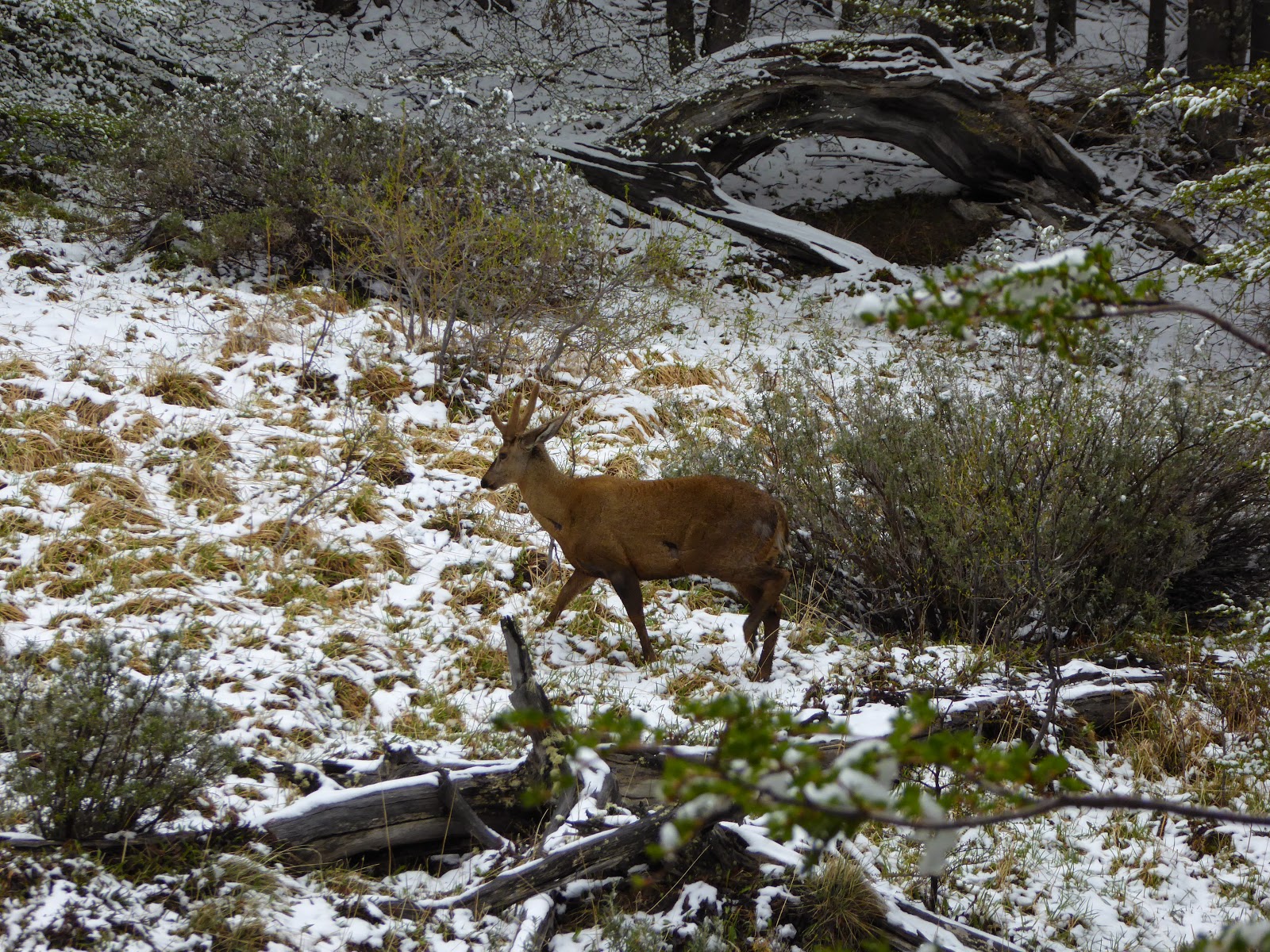
We took the (expensive) bus from Puerto Natales to the park entrance to pay the (expensive) entrance fee. The weather was pretty bad - grey and snowing lightly - and it was recommended to go west-east as there wasn't much chance of seeing the Torres in the east. Unfortunately, we'd booked our refugios to go the other way round, so we took an (expensive) shuttle bus to the start of the trail. We walked through the snow to the Refugio Chileno where we left our bags and continued up to the base of the Torres which, predictably, were hidden in the low cloud. The day was brightened by coming across two of the critically endangered (1500-2000 remaining) huemul deer, making a perfect Christmas card picture.

A huemul deer - there are only 20-100 in the national park
On the second morning we saw that the Torres were still covered in cloud, so we decided not to make the 4 hour round trip up to them again, and instead returned back down the valley towards Lake Nordenskjöld. We were able to enjoy the weather beginning to clear as we walked with the aquamarine lake to our left and the cordillera to our right. The colours had dramitcally changed from a black and white film yesterday to technicolour today. Our second refugio was at Los Cuernos (The Horns), named after the nearby distinctive grey granite peaks topped with a stripe of black rock. Our third day took us past the Cuernos into the French Valley. This was our favourite day of the trek - the steep valley passes the Glacier del Francés, where you can see avalanches of ice falling towards the valley floor, and continues to an amazing viewpoint surrounded by mountains and spires of rock. The return from the valley takes you back past these mountains and the glacier, back towards the bright blue lake.

At the top of the Valle Francés
After the valley, we continued through a section of skeletal remains of trees that were burnt in a forest fire in 2011-12. It was started by a hiker and burned around 176km² of the park. There are now strict rules about fire use - there are no fires or stoves allowed on the trails and you are only allowed to cook inside when at the refugios or campsites. Despite the lack of green trees, there are still fantastic views of the mountains reflected in the still lakes.

Los Cuernos reflected in Lake Sköttsberg
Our final two days took us from the Refugio Paine Grande up to Refugio Grey and back again. This walk takes you along the banks of Grey Lake, with icebergs floating in it which have fallen from Grey Glacier. It was a fitting end to the trek to emerge from the forest and see the glacier stretching across the lake in front of you.

Glacier Grey
On the final day, we took the (expensive) catamaran back across the lake to the starting point for our (expensive) bus back to Puerto Natales to relax for a couple of days. We are now returning to Argentina to meet Jo's family for a couple of weeks of trekking around El Calafate and El Chaltén.

Leaving the park, we finally got to see the Torres!
The granite spires in the centre of the photo.

Thursday, 2 April 2015

Glacier Perito Moreno and a Change in Plan

When Jo last posted, we were monitoring the state of my leg to see if it would hold up for future treks. I rested it for a few days, before testing it out on a short walk near El Chaltén. It was fine for the first part, which provided marvellous views over the town with the two peaks of Cerro Torre and Cerro Fitzroy behind it. I was glad to have finally managed a walk that let me see them. On the way back, however, my leg gave up and it was a very painful walk home.

Successfully made it to the viewpoint looking over El Chaltén
Our original plan had been to go to El Calafate next to trek on the Perito Moreno glacier before heading further south to do the famous 5-day W-trek around Torres del Paine national park. These plans would have to be shelved for now. We decided, instead, to carry on with that route but only with brief stops to break up the journey south to Tierra del Fuego. Hopefully I'll be able to rest my leg on the way before coming back to the treks we've been looking forward to.

The Perito Moreno glacier
In El Calafate, although we knew we couldn't do our ice trek we decided to visit the Perito Moreno glacier anyway It was a trip well worth doing. There is a series of walkways opposite the glacier, which flows into two lakes divided by a narrow channel. They give spectacular views of the huge wall of ice, up to 60m high, as large sections sporadically tumble and crash into the water below. It's one of the most awe-inspiring natural sights I've seen. It's easy to spend hours there, even in the cold and rain, listening to loud cracks and scanning the blue-coloured ice waiting for the next chunk to fall.

Not trekking on the glacier
From El Calafate, we've now arrived in Puerto Natales, having crossed our first land border of the trip into Chile. This is the base for the W-trek, but we are just here for some information about it for now, before heading further south to Punta Arenas.

The glacier in all of its glory